Sturgeon, Salmon, Red, Russian, Black, American, & More: Here’s What You Should Know About Caviar
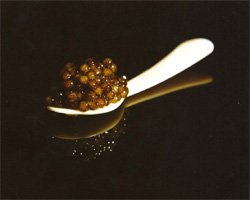
Accordingly, the roe of sturgeon was present in banquets at the time back to the fourth century BC according to records from the Greek philosopher Aristotle. Caviar became a major luxury delicacy later because of the Russian Czars. However, the Persians were technically the salted caviar creators. Many people give this honor in caviar history to the Russians who are famous for their malossol caviar, which is lightly salted.
International Trade Development
Russian caviar entered the international trade market in the nineteenth century. It was considered a luxury item throughout the world. The Russians were not alone in caviar production, as Iran, located on the southern end of the Caspian Sea, also began producing the delicacy. Persian caviar was also a highly respected quality product. In the twelfth century, caviar was well known in Russia and by the sixteenth century, it penetrated into Europe as a luxury item for royalty.
American Caviar Era

In 1873 caviar get more popularity when Henry Schacht established a caviar business in America. He used sturgeon from the Delaware River. The United States became a big caviar producer, only second to Russia. The fish roe was so popular in the US that saloons served it free of charge, as customers would buy more and more drinks to deal with its salty taste. High-end restaurants offered caviar as an appetizer. Europe became a huge buyer of American caviar.
The Decline and Conservation
However, things eventually changed. By the year 1910, the sturgeon was almost extinct in America because of over fishing. This resulted in the halting of production. Thus, caviar became a very expensive luxury item in the United States.
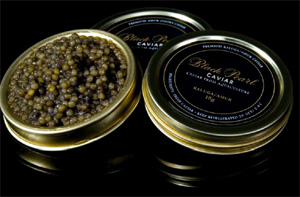
A similar fate followed in the Caspian Sea. Caviar history was marred again, as the sea that was the chief caviar creator also suffered from over fishing, pollution, and poaching. Caspian sturgeon populations were down, too. In 1988, the sturgeon gained protection as endangered species and trade was regulated. Regardless of this, black market trade and poaching still occur in the region. The regulations concerning the bans have changed throughout the years, but there is a limit put on sturgeon harvesting and trade. The limited amount of caviar that does come from the region is high priced, because of these regulations. As a result, farmed caviar and other alternatives are increasingly popular today.
What Exactly Is Caviar?
Definition and Classification
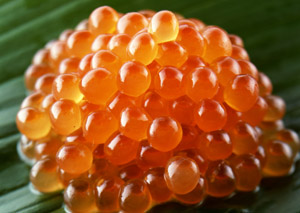
Caviar is salted fish roe (eggs); but not all salted fish roe is caviar. Caviar refers very specifically to the salted roe of sturgeon. When the word caviar appears alone, it implies that it the roe is of sturgeon origin, regardless of whether the sturgeon comes from Iran, the United States, or anywhere else. However, the word caviar can be used appropriately in tandem with the name of another fish—for example, salmon caviar, whitefish caviar, or trout caviar.
Modern Terminology and Sophistication
While the standalone word caviar on a tin or a menu denotes sturgeon caviar, today’s consumers and purveyors are too sophisticated to be so brief. Knowledgeable gourmets demand at least two modifying words preceding caviar to designate provenance as well as fish species: Iranian Osetra, American whitefish, California sturgeon…and now, farmed versus wild.
As caviar lovers and wine lovers both know, the affordable and accessible is as enjoyable as the rare and costly; and there’s a time and a place for everything.
Culinary Uses
Caviar is commercially marketed worldwide as a delicacy and is eaten as a garnish or a spread; for example, as hors d’œuvres or amuse bouche (appetizers).
